Retaining walls are essential components of modern infrastructure and construction projects across Saudi Arabia. From highways and industrial developments to residential communities and mega projects, retaining structures provide the stability required to safely manage changes in elevation and prevent soil movement.
Among the various retaining wall systems available today, gabion retaining walls have emerged as one of the most reliable, durable, and sustainable solutions for Saudi Arabia's demanding environmental conditions.
Their ability to combine structural performance with natural drainage and long service life makes them a preferred choice for engineers, consultants, contractors, and developers throughout the Kingdom.
This guide explains how gabion retaining walls work, where they are used, their advantages over conventional systems, and why they continue to gain popularity across Saudi Arabia.
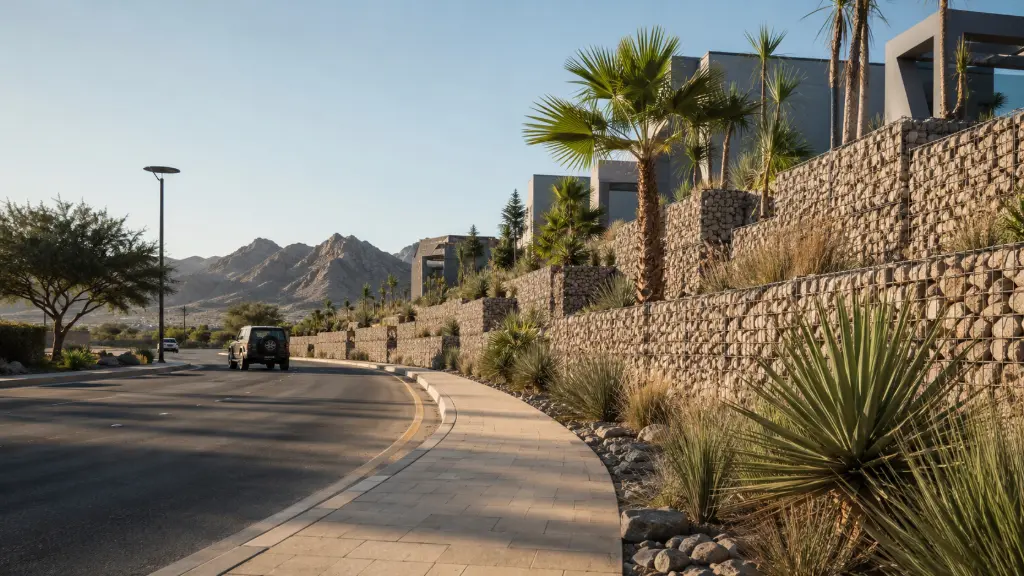
What Is a Gabion Retaining Wall?
A gabion retaining wall is a gravity retaining structure constructed using wire mesh baskets filled with durable natural stone.
The combined weight of the stone filled baskets creates the mass required to resist lateral soil pressure and stabilize the retained ground behind the wall.
Unlike reinforced concrete retaining walls, gabion systems allow water to pass naturally through the structure, significantly reducing hydrostatic pressure and improving long term performance.
The flexible nature of gabion construction also allows the wall to accommodate minor ground movement without cracking or structural failure.
Why Are Gabion Retaining Walls Suitable for Saudi Arabia?
Saudi Arabia presents unique geotechnical and environmental challenges that influence retaining wall design.
Projects often face:
- Extreme temperatures
- Flash flooding events
- Variable soil conditions
- Mountainous terrain
- Coastal environments
- Large scale earthworks
Based on practical experience across infrastructure and development projects, gabion retaining walls consistently perform well under these conditions.
Their permeability, flexibility, and resistance to environmental stress make them particularly suitable for applications where traditional rigid retaining systems may require additional drainage infrastructure or maintenance.
How Gabion Retaining Walls Work
Gabion retaining walls function primarily as gravity structures.
The self weight of the stone filled baskets resists the horizontal forces generated by retained soil.
Water that enters the backfill drains naturally through the stone fill and mesh openings rather than accumulating behind the structure.
This eliminates much of the hydrostatic pressure that commonly affects conventional retaining walls and reduces the need for complex drainage systems.
As the wall settles over time, the flexible mesh structure adapts to minor movement while maintaining overall stability.
Common Applications of Gabion Retaining Walls in Saudi Arabia
Highway Infrastructure
Road construction projects frequently require retaining walls to stabilize embankments and cut slopes.
Gabion retaining walls protect highways from erosion, support road platforms, and improve long term infrastructure reliability.
Industrial Developments
Industrial facilities often require site leveling and earth retention solutions.
Gabion systems provide cost effective retaining structures capable of supporting heavy industrial environments.
Residential Communities
Developers use gabion retaining walls to create buildable terraces, stabilize landscaped areas, and improve site utilization in residential projects.
Commercial Construction
Commercial developments frequently require retaining structures around parking areas, access roads, and elevated building platforms.
Gabions offer both structural performance and architectural appeal.
Mountain Roads
Projects in elevated regions such as Abha, Taif, Tabuk, and NEOM often require extensive slope stabilization and earth retention systems.
Gabion walls perform exceptionally well in these environments due to their flexibility and drainage capabilities.
Wadi Protection Projects
Retaining structures are commonly installed alongside wadis and drainage channels to protect infrastructure from erosion and water flow damage.
Gabion walls help stabilize these areas while allowing natural water movement.
Advantages of Gabion Retaining Walls
Superior Drainage Performance
One of the greatest advantages of gabion retaining walls is their permeability.
Water drains naturally through the stone filled baskets, preventing the buildup of hydrostatic pressure and improving wall stability.
Long Service Life
High quality galvanized and PVC coated gabion systems provide excellent resistance to corrosion and environmental exposure.
When designed and installed correctly, gabion retaining walls can perform reliably for decades.
Structural Flexibility
Ground settlement and movement can create significant problems for rigid retaining structures.
Gabion walls adapt to these changes without developing cracks or structural damage.
Lower Maintenance Requirements
The combination of natural drainage and flexible construction significantly reduces maintenance needs over the life of the structure.
Environmental Sustainability
Gabion retaining walls blend naturally into surrounding environments.
Vegetation can grow within the stone fill over time, improving biodiversity and visual integration with the landscape.
Faster Construction
Compared with many traditional retaining systems, gabion walls can often be installed more quickly, reducing project timelines and labor requirements.
Gabion Retaining Walls vs Concrete Retaining Walls
Choosing the correct retaining solution depends on project requirements, site conditions, and budget considerations.
Gabion retaining walls generally offer advantages in:
- Drainage performance
- Environmental sustainability
- Flexibility
- Maintenance costs
- Speed of installation
Concrete retaining walls may still be appropriate for applications requiring very narrow wall footprints or specific architectural requirements.
However, many engineers increasingly select gabion systems where drainage and long term resilience are priorities.
Design Considerations for Gabion Retaining Walls
Successful retaining wall performance depends on proper engineering design.
Important factors include:
- Wall height
- Soil characteristics
- Groundwater conditions
- Surcharge loads
- Drainage requirements
- Foundation stability
- Seismic considerations
Every project should undergo a detailed engineering assessment to determine the most suitable wall configuration.
Selecting the Right Gabion Material
Material quality plays a critical role in long term performance.
Projects should specify:
- Heavy galvanized steel wire
- PVC coated wire where necessary
- Durable stone fill
- Proper mesh dimensions
- High quality lacing and connection components
Compliance with international standards ensures consistent product quality and performance.
The Role of Gabion Retaining Walls in Saudi Vision 2030
Saudi Arabia's transformation under Vision 2030 is creating unprecedented demand for retaining structures across multiple sectors.
Gabion retaining walls support:
- Transportation infrastructure
- Tourism developments
- Smart city projects
- Industrial cities
- Logistics hubs
- Environmental protection initiatives
- Urban expansion programs
Their sustainability and long service life align closely with the Kingdom's long term infrastructure objectives.
Why Choose Hitech Gabion for Retaining Wall Projects?
Hitech Gabion supplies engineered retaining wall systems designed specifically for Saudi Arabia's environmental and construction requirements.
The company provides:
- High quality gabion products
- Technical support
- Custom design assistance
- Fast project delivery
- Compliance with international standards
With extensive experience supporting infrastructure and construction projects across the Kingdom, Hitech Gabion helps clients achieve durable and cost effective retaining solutions.
Frequently Asked Questions
How long do gabion retaining walls last?
Properly designed and installed gabion retaining walls can provide reliable performance for several decades, particularly when high quality galvanized or PVC coated materials are used.
Are gabion retaining walls suitable for highways?
Yes. Highway authorities and contractors frequently use gabion retaining walls for embankment stabilization, erosion protection, and slope support.
Do gabion retaining walls require drainage pipes?
In many cases, gabion walls eliminate the need for extensive drainage infrastructure because water naturally flows through the stone filled baskets.
Can gabion walls support large projects?
Yes. Engineers regularly design gabion retaining walls for major infrastructure, industrial, and transportation projects throughout Saudi Arabia.
Conclusion
Gabion retaining walls provide one of the most effective solutions for soil retention, slope stabilization, erosion control, and infrastructure protection in Saudi Arabia.
Their combination of strength, flexibility, drainage performance, and sustainability makes them particularly well suited for the Kingdom's environmental conditions and ambitious development plans.
As Saudi Arabia continues to expand its infrastructure and urban development projects, gabion retaining walls will remain a critical engineering solution for creating safe, resilient, and long lasting structures.