Gabion walls are widely used in civil engineering projects for retaining soil, stabilising slopes and controlling erosion. Their stone-filled wire mesh construction offers flexibility, drainage and resistance to many common site conditions. However, like any infrastructure system, gabion walls require proper inspection and maintenance to maintain their structural performance over time.
In Saudi Arabia, environmental conditions such as high temperatures, intense seasonal rainfall, windblown sand and coastal exposure can influence the condition of gabion structures. Projects near wadis, roads, drainage channels and industrial facilities may also experience changing water flow, soil movement and mechanical damage.
For contractors, consultants, facility managers and infrastructure owners, a planned inspection programme helps identify early signs of deterioration before they develop into more serious problems.
Why Is Gabion Wall Maintenance Important?
Gabion walls depend on several components working together: wire mesh, connecting wires, stone filling, foundations and drainage arrangements. Damage to one component can affect the performance of the overall structure.
For example, broken mesh can allow stones to escape, while foundation erosion may cause settlement or deformation. Corrosion can gradually reduce wire durability, and blocked drainage or unsuitable backfill can increase pressure behind the wall.
Routine inspections help identify these conditions and determine whether corrective action is required. Maintenance should focus not only on visible mesh damage but also on the surrounding ground, drainage paths and structural alignment.
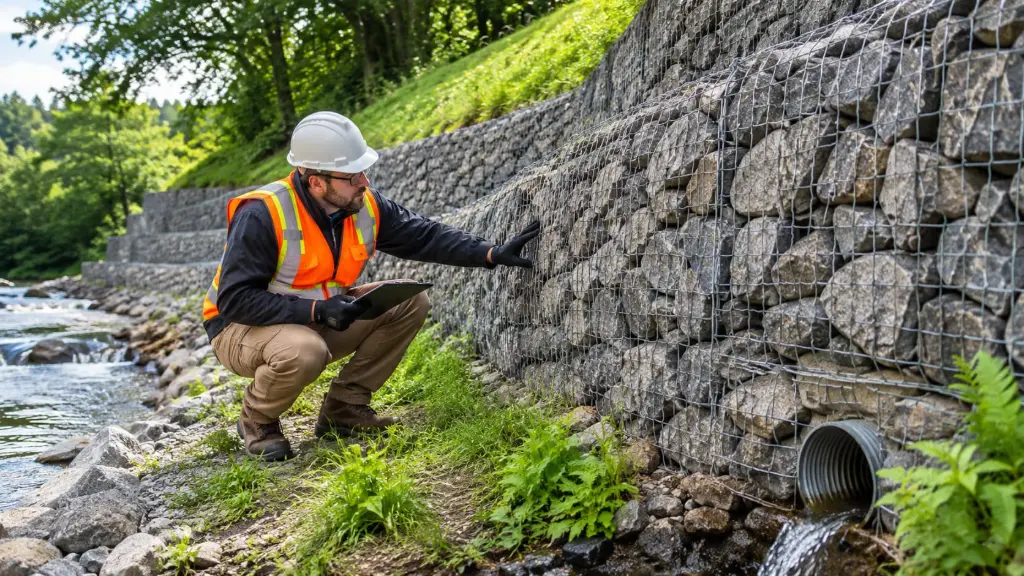
Key Areas to Inspect in a Gabion Wall
1. Wire Mesh Condition
The wire mesh holds the stone filling in place and maintains the shape of each gabion unit. Inspect the exposed surfaces for broken wires, damaged connections, excessive deformation and signs of corrosion. Particular attention should be given to corners, joints, exposed edges and areas that may have experienced impact from equipment or debris.
Small localised damage should be assessed promptly. If mesh deterioration is extensive, replacing individual wires or applying an improvised repair may not restore the required structural performance. The repair method should follow the manufacturer's guidance and engineering assessment.
2. Stone Filling and Loss of Material
Stone filling provides the weight and internal structure of a gabion wall. During inspection, check for missing stones, unusual settlement, visible gaps and displacement beyond the intended mesh profile.
Stone loss may result from damaged mesh, unsuitable stone grading, poor initial filling or external impact. Where stones have moved, the cause should be identified before refilling the affected section. Replacement stone should be compatible with the original specification, including size, durability and mesh aperture requirements.
3. Wall Alignment and Deformation
Gabion walls may accommodate some differential movement, but excessive deformation can indicate a problem with the foundation, backfill, drainage or structural design.
Inspect the wall for unusual bulging, tilting, localised settlement, separation between units and changes in the overall profile. Compare observations with the approved drawings or previous inspection records whenever possible. Any significant movement should be reviewed by a qualified engineer rather than treated as a cosmetic issue.
4. Foundation and Toe Protection
The base of a gabion wall is particularly important because it transfers structural loads to the supporting ground. Inspect the toe area for exposed foundations, soil removal, undermining and signs of scour.
This is especially important near wadis, drainage channels and locations exposed to concentrated surface runoff. Water flowing around or beneath a wall can remove supporting material and compromise stability. Where erosion is identified, the extent and cause should be investigated before selecting a repair solution.
5. Drainage and Backfill
Gabion structures are permeable, but drainage performance still depends on the surrounding soil, filter materials and site arrangement.
Check for blocked drainage outlets, accumulated sediment, water ponding and signs of soil migration through the gabion filling. Also inspect the backfill surface for unexpected depressions, cracks or water accumulation. Where geotextiles or filter layers are part of the original design, their condition and continuity should be considered when investigating drainage-related problems.
Common Gabion Wall Problems and Their Possible Causes
Observed problem | Possible cause | Recommended response |
Broken or separated mesh | Impact, corrosion or poor connections | Assess damage and repair using an approved method |
Missing stones | Mesh failure or unsuitable stone grading | Identify the cause and replace compatible stone |
Wall bulging | Poor filling, movement or excessive loading | Arrange an engineering inspection |
Wall settlement | Foundation weakness or ground movement | Investigate foundation conditions |
Soil erosion near the base | Scour or inadequate toe protection | Assess erosion depth and provide suitable protection |
Water accumulation behind the wall | Drainage or filtration problems | Investigate drainage paths and backfill conditions |
Corroded wire | Environmental exposure or coating damage | Assess remaining wire condition and repair or replace affected units as required |
These observations are indicators, not definitive diagnoses. The appropriate response depends on the wall's design, condition, location and intended service requirements.
How Saudi Arabia's Climate Can Affect Gabion Structures
Saudi Arabia's environmental conditions vary considerably between inland, mountainous and coastal regions. Maintenance requirements should therefore reflect the actual exposure conditions of each project.
High Temperatures and UV Exposure
High temperatures can affect exposed components and surrounding materials. Where gabion systems include polymer-coated wire, the coating should be suitable for the expected exposure conditions. Inspection should identify visible cracking, peeling or other coating damage.
Coastal and Industrial Environments
Structures located near coastal areas or industrial facilities may be exposed to more aggressive corrosion conditions. Salt exposure, moisture and industrial pollutants can influence the durability of metallic coatings.
The wire coating specification should be selected according to the project's environmental requirements. Regular inspection should focus on exposed wires, connections and areas where protective coatings may have been damaged.
Seasonal Rainfall and Flash Flooding
Heavy rainfall can produce rapid runoff and localised flooding, particularly around wadis and drainage channels. These events may cause scour, move stone filling or expose foundations.
After significant rainfall or flood events, inspect the wall's toe, adjacent ground, channel transitions and drainage arrangements. Additional inspections may be necessary where the structure protects critical infrastructure.
Windblown Sand and Sediment
Sand accumulation can obstruct drainage paths, cover exposed sections and change the way surface water moves around a structure. Periodic removal of accumulated sediment may be necessary where it affects drainage or inspection access.
Recommended Gabion Wall Inspection Schedule
Inspection frequency should be established according to the structure's importance, environmental exposure, design requirements and previous performance. The following schedule can serve as a general starting point, not a substitute for a project-specific maintenance plan.
Inspection type | Suggested timing | Main focus |
Routine visual inspection | Every 3–6 months | Mesh condition, stone loss and visible deformation |
Detailed condition inspection | Annually | Wall alignment, foundation, drainage and corrosion |
Event-based inspection | After major rainfall or flooding | Scour, erosion, displaced stones and settlement |
Specialist engineering inspection | When significant damage or movement is identified | Structural stability and repair requirements |
Critical infrastructure or structures exposed to aggressive conditions may require more frequent inspections.
Gabion Wall Maintenance Best Practices
A successful maintenance programme begins with accurate records. Keep the original design drawings, material specifications, installation records and previous inspection reports available for comparison. Photographs taken from consistent locations can help identify gradual changes in the wall's condition.
Remove vegetation, accumulated debris and sediment where they interfere with drainage or inspection. However, avoid removing established vegetation or altering the surrounding ground without assessing its effect on slope stability and erosion protection.
If mesh damage is discovered, isolate the affected area where necessary and arrange an appropriate repair. Repairs should use compatible materials and approved connection methods. Simply adding stones or tying damaged sections together without understanding the cause may conceal a more serious problem.
Where settlement, tilting, substantial bulging or foundation erosion is present, obtain an engineering assessment before carrying out major repairs. The underlying cause must be addressed to prevent repeated deterioration.
When Should a Gabion Wall Be Repaired or Replaced?
Minor damage may be repairable when it is localised and the surrounding structure remains stable. Examples include limited mesh damage, isolated stone loss or small areas of disturbed filling.
More serious conditions require detailed investigation. Extensive corrosion, repeated mesh failure, significant deformation, foundation undermining or widespread settlement may indicate that the structure no longer meets its intended performance requirements.
Repair, partial reconstruction or full replacement should be selected based on engineering assessment, not appearance alone. The decision should consider the extent of damage, remaining material condition, structural stability and the consequences of failure.
Quick Wrapup
Gabion wall maintenance is essential for preserving the performance of retaining structures and erosion-control systems across Saudi Arabia. Regular inspections of mesh, stone filling, wall alignment, foundations and drainage can help identify developing problems before they become more costly or difficult to address.
A structured maintenance programme should combine routine visual checks, post-event inspections and specialist engineering assessments whenever significant damage or movement is observed. With suitable materials, sound installation and appropriate maintenance, gabion systems can provide reliable service in a wide range of infrastructure applications.
Hitech Gabion supports project teams evaluating gabion solutions for retaining walls, slope stabilisation and erosion control. Contact the team to discuss product specifications and gabion requirements for your project.
Frequently Asked Questions