Reno mattresses are an important erosion control and hydraulic protection solution for infrastructure projects across Saudi Arabia. Their low profile design, flexible structure, and ability to protect large surface areas make them particularly effective for waterways, drainage channels, wadis, slopes, riverbanks, and areas exposed to flowing water.
As Saudi Arabia continues to develop highways, bridges, drainage infrastructure, tourism destinations, industrial facilities, and major urban projects, protecting soil and infrastructure from water erosion has become increasingly important.
Reno mattresses provide a practical solution where conventional gabion boxes may be too deep or where engineers need continuous surface protection rather than a conventional retaining structure.
This guide explains what Reno mattresses are, how they work, where they are used in Saudi Arabia, and the factors engineers and contractors should consider when selecting them for an erosion control project.
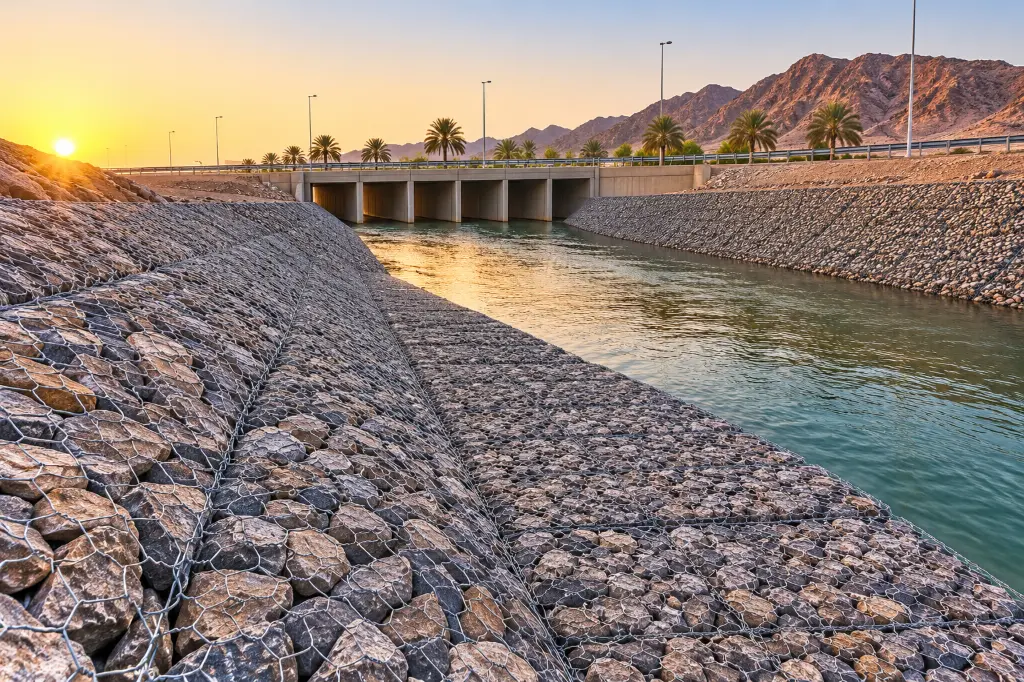
What Is a Reno Mattress?
A Reno mattress is a shallow, flexible wire mesh structure filled with natural stone. It is similar to a gabion basket but has a much lower height and a larger surface area.
The structure is divided into individual compartments that help maintain the position of the stone fill and improve overall stability.
Reno mattresses are normally installed directly over soil, slopes, channels, riverbanks, and other surfaces that require protection from erosion.
Their flexible construction allows them to follow the contours of the ground while providing a durable protective layer.
How Do Reno Mattresses Work?
Reno mattresses protect soil primarily by creating a stable layer between the ground and erosive forces.
When water flows over a protected surface, the stone-filled mattress absorbs and distributes hydraulic forces. This reduces direct contact between fast-moving water and the underlying soil.
The mesh holds the stone in position, preventing the fill material from being washed away.
At the same time, the structure remains permeable, allowing water to pass through the system instead of creating excessive pressure behind the protection layer.
This makes Reno mattresses particularly useful for hydraulic applications where water movement is a primary concern.
Why Are Reno Mattresses Important in Saudi Arabia?
Saudi Arabia has an arid climate, but intense rainfall events can produce sudden and powerful flows through wadis and drainage channels.
These events can rapidly erode exposed soil and damage infrastructure.
Projects may experience erosion around:
- Road embankments
- Bridge approaches
- Culverts
- Drainage channels
- Wadis
- Slopes
- Flood control structures
- Industrial developments
- Construction sites
Reno mattresses provide a durable surface protection system that helps reduce these risks.
Their flexibility also makes them suitable for locations where ground movement or settlement can occur.
Main Applications of Reno Mattresses in Saudi Arabia
Wadi Protection
Wadis are an important part of Saudi Arabia's natural drainage system.
During heavy rainfall, water can move through wadis at high velocity and cause severe erosion along their beds and banks.
Reno mattresses can protect vulnerable surfaces by creating a stable stone layer that reduces the impact of flowing water.
They are particularly useful where natural drainage needs to remain open while the surrounding soil requires protection.
Drainage Channel Protection
Drainage channels need to withstand repeated exposure to water flow.
Unprotected channel surfaces can gradually erode, increasing maintenance requirements and potentially changing the designed flow path.
Reno mattresses provide continuous protection along the channel bed and sides, helping maintain the intended hydraulic profile.
Riverbank and Waterway Protection
Although Saudi Arabia does not have the extensive permanent river systems found in many other countries, water channels, reservoirs, drainage systems, and seasonal waterways still require erosion protection.
Reno mattresses can stabilize vulnerable areas and reduce soil loss caused by water movement.
Highway Drainage Protection
Road infrastructure often includes culverts, drainage channels, embankments, and water crossings.
If water escapes its intended path, it can quickly erode soil around the road structure.
Reno mattresses help protect these areas and reduce the risk of erosion-related infrastructure damage.
Bridge and Culvert Protection
Water flowing around bridge approaches and culvert outlets can create localized erosion.
Engineers can use Reno mattresses to protect the soil surrounding these structures and reduce the impact of hydraulic forces.
Slope Protection
Reno mattresses can be installed over slopes where surface runoff threatens to remove soil.
They provide a continuous protective layer while maintaining flexibility and allowing vegetation to establish where the design permits.
Flood Protection Systems
Projects exposed to flash flooding require effective methods of controlling water-related erosion.
Reno mattresses can form part of a wider flood protection system by protecting channels, embankments, and other surfaces exposed to high water flow.
Reno Mattress vs Gabion Box
Reno mattresses and gabion boxes use similar wire mesh and stone-filled construction, but they serve different engineering purposes.
A gabion box is deeper and is commonly used to construct retaining walls and gravity structures.
A Reno mattress is shallow and is primarily used for surface protection and erosion control.
Gabion Boxes Are Generally Used For:
- Retaining walls
- Soil retention
- Slope stabilization
- Structural protection
- Gravity structures
Reno Mattresses Are Generally Used For:
- Channel lining
- Wadi protection
- Riverbank protection
- Slope surface protection
- Erosion control
- Hydraulic protection
Selecting between the two depends on whether the project needs structural soil retention or surface protection against erosion.
Contact Us
Enquire Now — Gabion Reno Mattresses Solutions.
Key Benefits of Reno Mattresses
Excellent Erosion Protection
Reno mattresses create a durable protective surface that reduces the direct impact of flowing water on soil.
Flexible Construction
The flexible mesh structure can accommodate changes in ground conditions better than many rigid surface protection systems.
Natural Drainage
The stone-filled structure allows water to pass through the system, helping prevent excessive water pressure.
Large Surface Coverage
Because Reno mattresses have a low profile and large footprint, they can protect extensive areas efficiently.
Long-Term Performance
High-quality galvanized or PVC-coated wire provides corrosion protection and helps extend the service life of the system.
Low Maintenance
Once properly installed, Reno mattresses generally require limited maintenance compared with erosion-prone unprotected soil surfaces.
Natural Appearance
The use of natural stone allows the system to blend with surrounding landscapes, making it suitable for environmental and landscaping applications as well as civil engineering projects.
Choosing the Right Reno Mattress
The correct specification depends on the project's hydraulic, geotechnical, and environmental conditions.
Important considerations include:
Wire Coating
The appropriate coating should be selected according to exposure conditions.
Galvanized wire is suitable for many applications, while PVC-coated wire can provide additional protection where greater corrosion resistance is required.
Mesh Configuration
Mesh size and configuration should be selected according to the stone size and project requirements.
The stone must remain securely contained within the mattress during normal and extreme flow conditions.
Stone Fill
Stone quality is critical to performance.
The fill material should be durable, resistant to weathering, and appropriately sized for the selected mesh.
Poor-quality stone can break down over time and reduce the effectiveness of the protection system.
Ground Preparation
The underlying surface should be properly prepared before installation.
Depending on site conditions, engineers may specify geotextile separation or filtration layers beneath the mattress to reduce soil migration and improve system performance.
Reno Mattresses and Geotextiles
Reno mattresses and geotextiles can work together as part of an integrated erosion control system.
A geotextile layer beneath the mattress can help:
- Separate soil and stone
- Control soil migration
- Improve filtration
- Support drainage
- Protect the underlying ground
The combination is particularly useful in projects where fine soil particles could otherwise move through the stone layer.
The correct geotextile specification should be determined according to the soil and hydraulic conditions of the project.
Installation Considerations
Proper installation is essential for long-term performance.
A typical installation process involves:
- Preparing and grading the surface.
- Installing the specified geotextile or filter layer where required.
- Positioning and connecting the Reno mattress units.
- Securing the mattress to the prepared surface.
- Filling the compartments with suitable stone.
- Closing and securing the mesh.
- Inspecting connections and exposed edges.
- Confirming that the finished surface follows the required project profile.
Large or hydraulically demanding projects should follow an engineered installation method based on site-specific calculations and specifications.
Reno Mattresses for Saudi Infrastructure Projects
Reno mattresses can support several types of infrastructure development across the Kingdom.
They are particularly relevant to:
- Highway projects
- Bridge infrastructure
- Stormwater management
- Wadi development
- Flood protection
- Industrial projects
- Tourism developments
- Urban drainage systems
- Slope protection projects
Their ability to combine erosion resistance with flexible construction makes them a valuable component of modern infrastructure protection.
Reno Mattresses and Saudi Vision 2030
Saudi Vision 2030 is driving major investment in infrastructure, tourism, transportation, environmental protection, and urban development.
As new developments expand into challenging terrain and previously undeveloped areas, effective water and erosion management becomes increasingly important.
Reno mattresses can contribute to these projects by helping protect infrastructure from erosion while supporting durable and environmentally compatible construction.
Why Choose Hitech Gabion for Reno Mattresses?
Hitech Gabion provides gabion and erosion control solutions for infrastructure, construction, environmental protection, and landscaping projects across Saudi Arabia.
The company's product range supports applications including:
- Wadi protection
- Erosion control
- Channel protection
- Slope stabilization
- Retaining structures
- Infrastructure protection
Hitech Gabion works with contractors, engineers, consultants, and project owners to provide products suited to individual project requirements.
For projects requiring a combination of Reno mattresses, gabion boxes, geotextiles, and other protection systems, selecting compatible products from an experienced supplier can simplify procurement and improve project coordination.
Frequently Asked Questions
Reno mattresses are primarily used for erosion control and surface protection. Common applications include drainage channels, wadis, slopes, waterways, embankments, and areas exposed to flowing water.
A Reno mattress is shallow and designed mainly for surface and hydraulic protection. A gabion box is deeper and commonly used for retaining walls, soil retention, and gravity structures.
Yes. Reno mattresses can be used to protect wadi beds and banks from erosion, subject to appropriate hydraulic and geotechnical design.
Yes. Geotextiles can be installed beneath Reno mattresses where filtration, soil separation, or control of soil migration is required.
Service life depends on wire coating, environmental exposure, stone quality, installation, and project conditions. Properly specified and installed systems can provide long-term erosion protection.
PVC-coated wire can provide additional corrosion protection in environments where moisture, salinity, or other aggressive exposure increases corrosion risk. The final specification should be based on the project's environmental conditions.