The reality of building in Saudi Arabia requires innovative solutions of engineering that are able to withstand harsh heat and salty soil and seasonal floods, without compromise in appearance and durability. Gabion walls are among the most efficient and viable structural solutions which are today, offering strength, flexibility and aesthetics both in terms of infrastructure and commercial purposes.
To the contractors and site engineers, such knowledge on the technical aspects of designing and installation of the gabion walls is important in ensuring that the outcomes are durable and compliant. The following practical and high intent guide by Hitech Gabion illustrates key provisions including foundations and batter angles and international standards among others to facilitate the success of all gabion projects within the Kingdom.
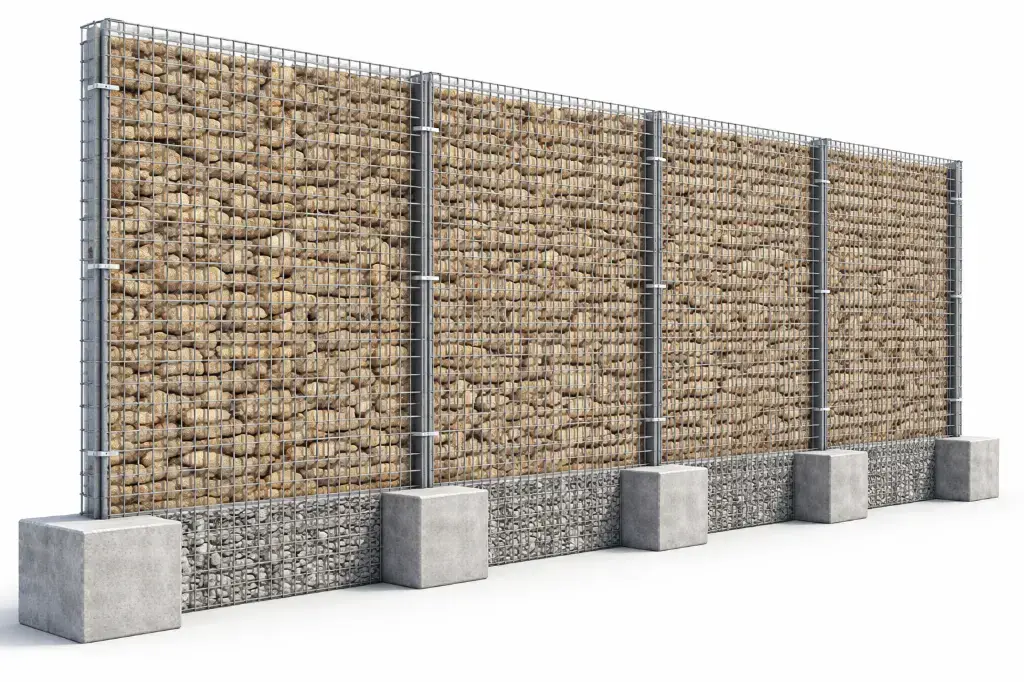
Why are Gabion Walls the best in Saudi Projects?
Gabion walls have also been recognized as the applauded option in terms of infrastructure, highways, industrial zones and landscaping in Saudi Arabia. Their core benefits include:
- Durability: Fabricated using galvanized or PVC coated steel wire to prevent corrosion.
- Flexibility: Bend with soil movement unlike concrete.
- Permeability: Water can drain and this prevents hydrostatic pressure.
- Sustainability: stuffed with natural rock or recycled aggregates in the local quarries.
Such characteristics contribute to the popularity of using gabion walls to protect wadi, stabilize slopes, and landscape the place in a commercial manner in such locations as Riyadh, Jeddah, Dammam and Al Khobar.
Hitech Gabion Technical Approach.
Design at Hitech Gabion starts with proper analysis of site conditions and the design meets the Saudi municipal and international requirements. Both structural integrity and aesthetic harmony with the landscape are made unique to each project.
The major design parameters are:
Technical Requirements
It is highly important to have a sound and prepared foundation. The base should:
- Be dug to a solid, stable ground.
- Add a layer of compacted gravel or crushed stone (smallest amount of 150 mm).
- Keep the surface even in order to maintain the same position of the gabions.
In the case of the soft or expansive soils, Hitech suggests the use of geotextile membranes beneath the foundation to ensure the prevention of soil migration and settlement.
Batter Angle and Wall Alignment.
The angle of the batter (tilt of the wall backwards) is vital to the stability and drainage. Typical design angles:
- Vertical walls: To use with low height landscaping features (less than 1.5 m).
- 6 o -10 o batter angle: Walls, retaining, load bearing, more than 2 m.
The Hitech engineering department keeps the slope in the right proportion depending on the load on the site and the soil type and minimizes chances of deformation or fall.
Compliance and Standards
Hitech Gabion ensures all products meet or exceed global standards to support safe, durable, and compliant infrastructure projects in Saudi Arabia.
| Standard | Description |
|---|---|
| ASTM A975 | Double-twisted hexagonal wire mesh specification. |
| EN 10223-3 | European standard for gabion mesh wire. |
| BS 8002 | Code of practice for retaining wall design. |
| SASO (KSA) | Saudi compliance for civil and environmental safety. |
Back fill and Drainage Design.
Gabion walls require proper drainage. Hitech recommends:
- Laying drainage pipes or geotextile membrane behind retaining walls.
- Working with graded fill material (20 -100 mm).
- Use of fine soil or clay should be avoided in order to keep it permeable.
This will prevent the accumulation of water pressure in the rear of the wall maintaining stability in the long run.
Connection and Reinforcement
The gabions baskets have to be fastened with spiral binders, lacing wires or C-rings. Hitech Gabion also focuses on the application of the double-twisted mesh that offers greater strength and cannot be unravelled even in the event of failure of one of the wires.
Additional reinforcement is applied to tall retaining walls by the use of tie-back anchors or stepped wall configurations.
Checklist for Contractors
Before starting a gabion wall project in Saudi Arabia, contractors should verify the following key steps to ensure structural reliability, visual consistency, and compliance with KSA engineering standards.
| Phase | Checklist Item | Hitech Guidance |
|---|---|---|
| Design | Confirm load requirements, wall height, and batter angle. | Engineering team approval needed. |
| Foundation | Excavate and level base, install geotextile layer. | Compact and stabilize soil. |
| Assembly | Install baskets and interconnect securely. | Use galvanized or PVC wire. |
| Filling | Use approved rock fill (100–250 mm). | Avoid sand or small gravel. |
| Drainage | Add weep holes and pipes where necessary. | Maintain a water flow path. |
| Finishing | Compact backfill and inspect alignment. | QA check before project handover. |
Hitech Gabion products
Hitech Gabion products are popular in:
- Highway embankments to stabilize slope and drain.
- Industrial complexes to retain structures and perimeter walls
- Commercial landscapes Retaining walls and seats of beauty.
- Wadi protection coating channels against erosion and rush.
Every installation is designed to fit the local environmental loads making it durable and requiring minimum maintenance in the long run.
Conclusion
Construction of a gabion wall cannot be simply piled with stones; it is a planned and calculated process and is sensitive to precision and adherence, as well as long-term planning. In the case of Saudi infrastructure and business locations, adhering to a technical checklist is necessary to ascertain that every installation has been appropriated within performance and safety standards.
Using the experience of Hitech Gabion, the contractor will be able to perform construction that not only satisfies the engineering needs such as foundation depth, batter angle and international compliance, but also to create the structures that become resilient, sustainable and aesthetically appealing, constructed to endure in the hostile Saudi environment.