In Saudi Arabia’s fast-growing infrastructure and event management sectors, sustainability is becoming a vital part of project planning. However, what is a gabion wall, and how gabion walls work to safeguard the landscape and buildings? These green and strong walls are gaining popularity in the construction and landscaping works of people around the globe with particular interest in the areas that suffer erosion or floods.
Gabion walls bring an ideal blend of civil engineering and nature. Gabion walls can be trusted to work, they are long lasting and can be adjusted to suit various environments whether in withholding the soil, preventing water erosion or designing the garden.
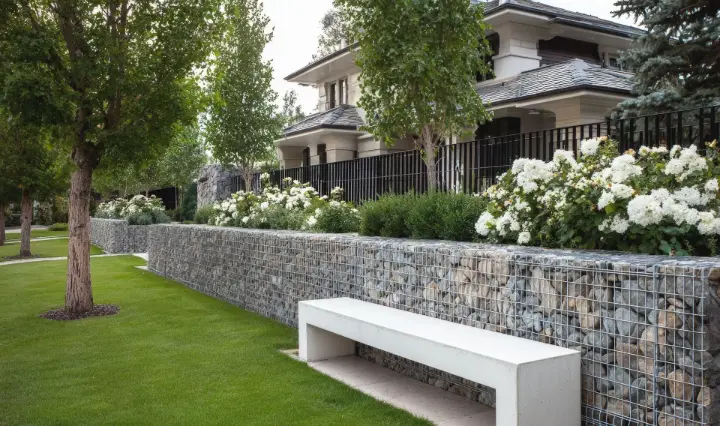
What Is a Gabion Wall?
A gabion wall is a wall constructed by baskets of rectangular or cylindrical shape of wires that are stuffed with stones, rocks and other natural materials. The gabion name is a product of the Italian word, gabion (meaning large cage).
All cages will be constructed of galvanized steel, PVC-coated wire, or stainless steel mesh that is very robust and resistant to corrosion. Such cages are then stuffed with limestone, granite, basalt, or sandstone, which is determined by the local availability and aesthetics.
A gabion wall is in essence a combination of natural stone weight and the flexibility of metallic meshes to form an object that will be able to withstand heavy pressure in soil or water.
Common Types of Gabion Walls
Gabion walls are available in various types based on their usage and design needs:
- Gravity Gabion Walls - This is the most widely used and all they depend on is their weight to push the pressure and stay in place.
- Mechanically Stabilized Gabion Walls -These are designed with taller structures, which incorporate geogrids or strength reinforcements.
- Decorative Gabion Walls - These are frequently used in gardens, villas or in the open street, and are not designed to support any weight.
Gabion Mattresses (Reno Mattresses) These are flat and wide designs employed to save riverbanks, canals, and coastal regions against erosion.
How Gabion Walls Work
To determine how the gabion walls operate, one should get knowledge on the engineering principle underpinning its use, which is gravity and permeability. Gabion walls are used to combat the forces of soil or water in the back of the wall.
Their working process can be broken down step by step as follows:
Weight-Based Stability
Gabion walls are gravity walls, that is, their strength is provided by the pure weight of the baskets with stones. The cement stones oppose the pressure of the soil and maintain the slopes or embankments.
Flexibility and Movement
Gabion walls, unlike the rigid concrete walls, can to some extent move or bend without collapsing. This gives them the ability to adjust to ground movement or settlement particularly on earthquake or flood prone regions.
Drainage Efficiency
Gabions walls are not solid and hence water flows through the spaces between stones with ease. This minimizes the hydrostatic pressure which is one of the major causes of failure of walls in structures made of concrete.
Erosion Control
Gabion walls are used in riverbanks as well as along the coastlines as a protective shield that takes in the energy of waves or current. The stones help to dissipate the water force and so, the soil does not erode or lose its sediment.
Vegetation Support
In the course of time, vegetation can be developed in the crevices of the stones. Such natural development also enhances the wall and boosts its environmental advantage and makes the wall blend with the environment.
Advantages of Gabion Walls
Gabion walls offer several advantages over traditional retaining or boundary walls, especially in demanding site conditions.
| Feature | Gabion Wall Advantage |
|---|---|
| Durability | Made from corrosion-resistant wire and strong stones, gabion walls can last for decades. |
| Drainage | Naturally porous, allowing water flow and preventing pressure buildup. |
| Flexibility | Adapts to ground movement without cracking. |
| Cost-Effective | Uses locally available stones and requires minimal maintenance. |
| Environmentally Friendly | Encourages vegetation growth and uses natural materials. |
| Aesthetic Design | Offers a natural look for gardens, villas, or public spaces. |
Maintenance and Longevity
Gabion walls are not very demanding to maintain. They do not experience damage from pressure or cracks since they are self-draining. With time the metal mesh can have a natural patina, however, this does not influence performance when galvanized or PVC-coated wire is utilized.
Gabion made walls should last a total of 50 to 100 years based on the environmental factors and quality of the materials used. Frequent inspection after every two or three years will mean that any stones that have been moved out of position or a broken mesh can be substituted with ease.
Widely used Gabion Walls.
Gabion walls find application in various industries both in terms of functionality and ornamentation.
Flood Control and Erosion Control.
Prevention of erosion on the bank of rivers, coasts, and canals is one of the primary purposes of the application of gabion walls. They are permeable and thus stabilize the soil and allow water to go through.
Highway and Roadside Assistance.
Gabion walls are used in infrastructure to retain the soil on a steeper slope along highway or tunnel edges.
Landscaping and Architecture.
Gabion walls are utilized by modern designers in garden planters, the boundaries of the villas, fountains, and feature walls because of their natural appearance and texture.
Sound and Thermal Barriers
The gabion walls also minimize noise pollution, serve as thermal buffers in residential locations and thus are the best in terms of sustainable architecture.
Why Choose Gabion Walls Over Concrete Walls?
A side-by-side comparison to help contractors and consultants evaluate gabion walls versus concrete walls for cost, drainage, durability, appearance, and installation speed.
| Aspect | Gabion Wall | Concrete Wall |
|---|---|---|
| Cost | Cheaper, uses local materials | Expensive materials and labor |
| Drainage | Naturally porous | Needs artificial drains |
| Aesthetic Value | Natural and eco-friendly | Industrial and rigid look |
| Durability | High flexibility and strength | Brittle and prone to cracks |
| Installation Time | Quick and modular | Requires curing and formwork |
Conclusion
Since you have now learned the meaning of a gabion wall and how the gabion walls can work, it is easy to see why they have become such a big rage in the contemporary engineering and landscaping world. Their strength, drainage ability, and natural beauty make them the perfect choice against erosion, slope stabilization and outdoor design.
Gabion walls are a sure, long-lasting, and cost effective method of construction with numerous applications, such as a civil engineer, landscape architect, or homeowner to create structures that fuse with the natural environment.