Saudi Arabia’s climate presents specific challenges for infrastructure located near wadis, drainage channels and flood prone areas. Although many regions experience limited rainfall for much of the year, intense seasonal storms can produce rapid surface runoff, strong water flows and localised flooding. These conditions can cause soil erosion, damage embankments and undermine roads, bridges and other infrastructure.
Gabion systems offer a practical solution for selected erosion control and flood protection applications. Their stone filled wire mesh structure allows water to pass through while providing weight, flexibility and protection against soil movement. When properly designed and installed, gabions can help stabilize channel banks, protect embankments and reduce erosion around infrastructure.
For contractors, consultants and infrastructure developers in Saudi Arabia, understanding where gabions are suitable and how they should be specified is essential to achieving reliable project performance.
What Are Gabions Used for in Wadi and Flood Protection?
Gabions are rectangular or mattress shaped units manufactured from wire mesh and filled with suitable stones. They are commonly used in civil engineering projects where soil stabilisation, erosion control and hydraulic protection are required.
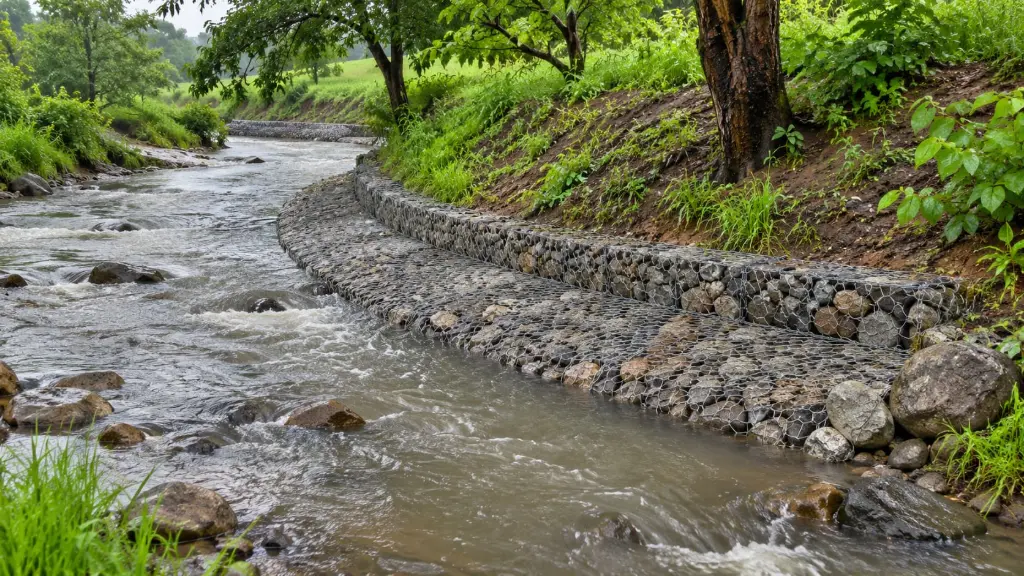
In wadi protection projects, gabions can be installed along channel banks, around drainage structures and at selected locations where flowing water may erode exposed soil. Their permeable structure allows water to move through the stone filling, helping reduce the pressure that can develop behind impermeable retaining structures.
Gabions are not a universal flood control solution. Their suitability depends on hydraulic conditions, channel geometry, soil characteristics, flow velocity, expected water levels and the consequences of structural failure. A qualified engineer should assess these factors before selecting a gabion system.
Key Applications of Gabions in Saudi Arabian Infrastructure
1. Wadi Bank Protection
Wadi channels can experience significant changes in water flow during heavy rainfall. Concentrated runoff may remove soil from channel banks, gradually weakening the surrounding ground and threatening nearby infrastructure.
Gabion retaining structures can protect selected sections of wadi banks by providing a durable stone filled facing or retaining system. Their flexibility can also help accommodate some ground movement without the brittle cracking associated with certain rigid structures.
The design must account for channel alignment, foundation conditions, scour depth and the potential for water to overtop or bypass the protection.
2. Road and Highway Embankment Protection
Roads crossing valleys, drainage channels and low lying areas may be exposed to erosion during storm events. Water flowing along embankment slopes can remove surface material and weaken the road formation.
Gabion walls and mattresses can be used in suitable locations to protect embankment toes, reinforce slopes and reduce erosion around drainage crossings. They may also be incorporated into protection works near culverts and bridge approaches. Their use should be coordinated with the road drainage system. Protecting one section without addressing the overall flow path may simply transfer erosion to another location.
3. Drainage Channel and Culvert Protection
Drainage channels and culvert outlets can experience concentrated water flow, particularly where runoff is discharged into natural ground. This concentration may create local scour, undermine channel surfaces and damage nearby structures.
Gabion mattresses can provide surface protection in selected channel sections, while gabion structures may be used for bank stabilisation where the geometry and hydraulic conditions support their application. Engineers should pay particular attention to transitions between gabion protection and unprotected ground. Poorly designed transitions can become points of concentrated erosion.
4. Slope and Embankment Stabilisation
Floodwater can destabilise exposed slopes by removing surface soil and changing moisture conditions. Gabion retaining structures may help support vulnerable sections where the required geometry, foundation strength and loading conditions are suitable.
For larger or more complex slopes, gabions may be used alongside engineered drainage, geotextiles, soil reinforcement or other stabilisation measures. The complete system should be designed around the actual ground conditions rather than relying on the gabion structure alone.
Choosing the Right Gabion System
Different gabion configurations serve different functions. Selecting the appropriate type is important because a retaining structure and a channel lining mattress do not perform the same role.
Gabion system | Typical application | Main function |
Gabion baskets | Wadi banks and retaining structures | Structural support and erosion protection |
Gabion mattresses | Channel beds and embankment surfaces | Surface protection against erosion and scour |
Reno type mattresses | Hydraulic and channel protection works | Flexible, low profile erosion protection |
Gabion structures with stepped profiles | Selected slopes and retaining applications | Bank stabilisation and support |
The final selection should consider the required dimensions, mesh configuration, wire coating, diaphragm arrangement, stone grading and installation requirements. These specifications must be established for the project rather than assumed to be identical across all Saudi infrastructure applications.
Important Design Considerations for Wadi Protection
Hydraulic Conditions and Flow Velocity
The expected flow conditions are among the most important factors in gabion design. Engineers should assess peak discharge, flow velocity, water depth, turbulence and the possibility of debris accumulation.
High velocity flow can displace stone filling or damage mesh if the system is inadequately specified. Hydraulic assessment should therefore determine whether the proposed gabion configuration can resist the expected conditions.
Scour and Foundation Stability
Scour occurs when flowing water removes material from the bed or around the base of a structure. It can undermine gabion installations even when the visible structure remains in good condition.
Foundation preparation, embedment depth, toe protection and channel bed conditions should be evaluated during design. The required protection depth depends on the predicted scour conditions and site investigation.
Wire Durability and Corrosion Protection
Saudi Arabia includes environments with high temperatures, dust, coastal exposure and varying soil conditions. These factors can influence the durability requirements of gabion wire.
The selected mesh should have an appropriate metallic coating and, where required by the project environment, an additional protective coating. Specifications should identify the applicable wire and coating requirements and confirm them through product documentation.
Stone Quality and Grading
Stone filling must be compatible with the mesh aperture and suitable for the hydraulic and environmental conditions. Stones should be durable, sufficiently large to remain contained and resistant to degradation under expected exposure.
The use of unsuitable or poorly graded stone can lead to settlement, loss of filling and reduced protection performance. Stone selection should be based on project specifications and verified material sources.
Drainage and Geotextile Requirements
Gabions are permeable, but this does not eliminate the need for proper drainage and filtration design. Where fine soil could migrate through the stone filling, a suitable filter layer or geotextile may be required. The filter system should retain the underlying soil while allowing water to pass. Incorrect filter selection or installation can contribute to internal erosion and loss of foundation material.
Gabions Compared with Concrete for Flood Protection
Concrete structures are suitable for many hydraulic applications, particularly where rigid geometry, controlled flow surfaces or specific structural requirements are necessary. However, they may require more demanding foundation and joint detailing, depending on site conditions.
Gabions provide a different approach. Their stone filled construction is permeable and can accommodate some differential movement when properly designed. They may also be practical where access to conventional construction materials, site logistics and installation methods influence project decisions.
Neither solution is automatically better. The selection should consider hydraulic performance, structural stability, durability, construction access, maintenance requirements and whole life cost. In some projects, gabions and concrete can be used together as complementary protection measures.
Installation and Quality Control
Successful gabion installation starts with proper site preparation. The foundation should be cleared, excavated and levelled according to the approved drawings. Weak or unsuitable material must be addressed before placing the units.
The mesh units should be assembled, connected and secured in accordance with the manufacturer's instructions. Internal diaphragms and connections help maintain the intended shape during filling. Stones should be placed carefully to minimise large voids and avoid excessive deformation of the mesh.
During installation, project teams should inspect the foundation, mesh condition, connections, stone quality, filling arrangement and completed profile. Any geotextile or filter layer should be installed without gaps or damage. Final inspection should confirm that the completed structure matches the approved design and that drainage paths, transitions and toe protection are properly formed.
Why Consider Gabions for Saudi Infrastructure Projects?
Gabions can provide several practical advantages when selected for appropriate applications. Their permeable construction supports drainage, while their modular units can be transported and assembled in stages. Their flexibility may also help them accommodate limited ground movement.
For projects involving wadis, drainage channels, highway embankments and erosion prone areas, these characteristics can make gabions a useful option for engineered protection works.
However, long term performance depends on correct design, suitable materials, skilled installation and periodic inspection. Gabions should be treated as engineered infrastructure components, not simply as stone filled wire containers.
Conclusion
Wadi banks, drainage channels and road embankments can face significant erosion risks during intense rainfall in Saudi Arabia. Properly engineered gabion baskets and mattresses can help protect vulnerable areas by providing permeable, flexible and durable erosion control systems.
The most important factors are correct hydraulic assessment, foundation preparation, scour protection, suitable wire coatings, quality stone and appropriate filtration. With these elements addressed during design and construction, gabions can become a valuable part of infrastructure protection projects across the Kingdom.
Hitech Gabion can support project teams evaluating gabion solutions for retaining structures, channel protection and erosion control applications. Contractors and consultants can contact the team to discuss project requirements and request product information or a quotation.
Frequently Asked Questions